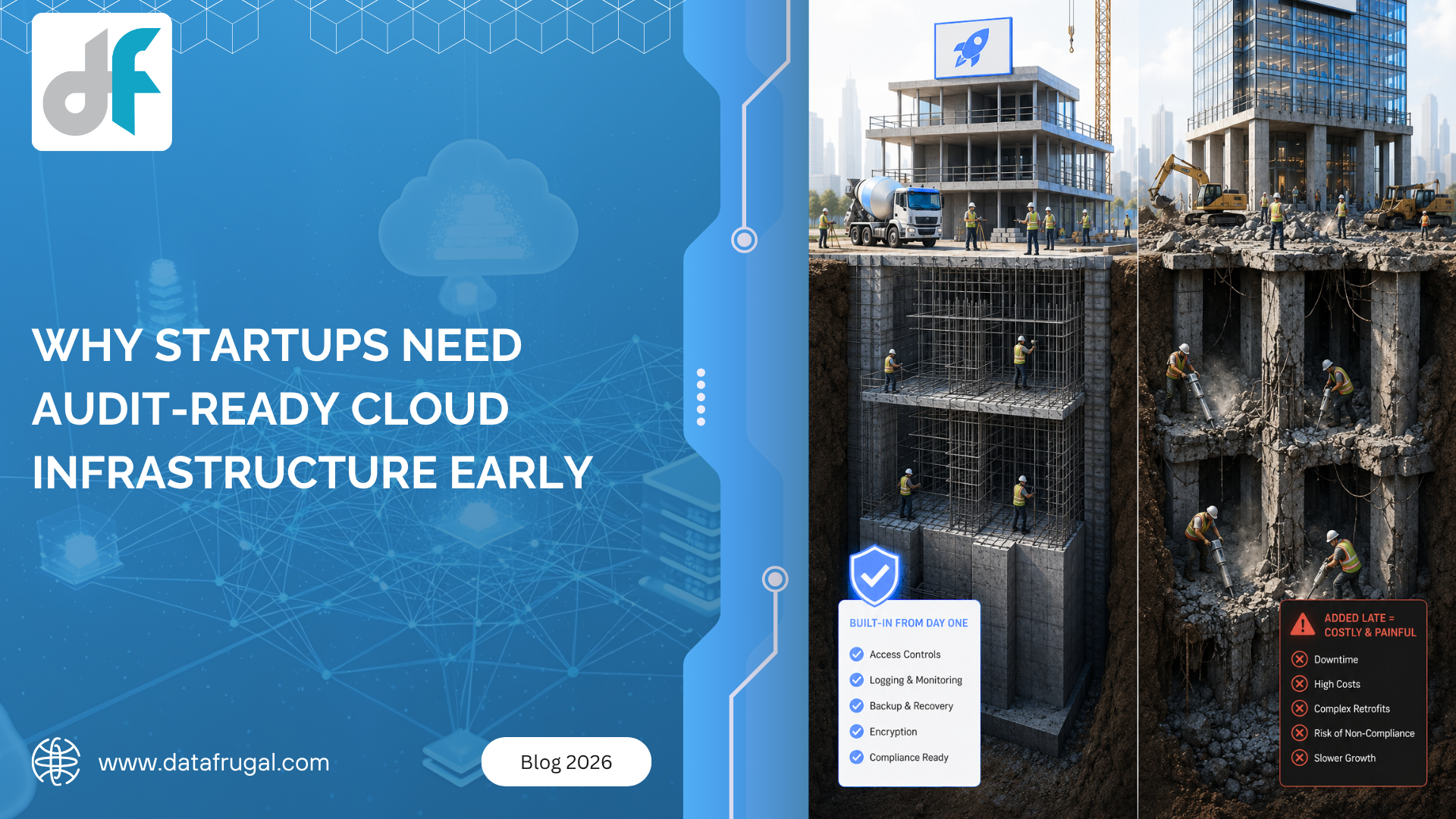
Most startups do not think about governance, audit readiness, or compliance until a customer asks uncomfortable questions.
Can you prove who accessed customer data?
Can you prove data retention policies are being enforced?
Can you show evidence that critical operational data cannot be modified or deleted?
These questions often appear much earlier than founders expect. They surface during enterprise sales conversations, investor due diligence, security reviews, compliance preparation, or after an operational incident.
Many startups assume governance is a problem for large enterprises. In reality, the earlier a startup builds operational visibility and accountability into its cloud infrastructure, the easier it becomes to scale without introducing governance gaps later.
Audit readiness is no longer just about passing compliance reviews. It has become a critical part of customer trust, operational resilience, and enterprise growth.
The Mistake Most Startups Make
Early-stage teams focus on speed.
Infrastructure is deployed quickly, permissions are granted broadly, automation scripts are added, and cloud environments evolve rapidly. This approach helps teams move fast, but it often creates governance blind spots.
In many organizations, nobody notices these issues until something goes wrong.
Common examples include:
- Shared administrative credentials across teams
- Publicly exposed storage due to configuration mistakes
- Missing audit evidence during customer reviews
- No visibility into who accessed critical data
- Recovery data without proper retention controls
- AI or automation tools operating with excessive permissions
At first, these issues seem harmless. As infrastructure grows, they become operational and reputational risks.
Enterprise Customers Expect Proof, Not Promises
One of the biggest surprises for growing startups is that enterprise customers increasingly ask for evidence.
They want to know:
- Who accessed sensitive information?
- How is customer data protected?
- What retention policies exist?
- Can data be deleted accidentally?
- Is operational activity traceable?
Founders often discover that answering these questions is difficult because governance was never built into the infrastructure.
This is where enterprise readiness starts becoming important.
Enterprise readiness is not simply about having more infrastructure. It is about demonstrating operational accountability, governance, and trust.
The companies that prepare early can respond confidently during customer reviews. The companies that do not often scramble to gather evidence at the last minute.
Why Governance Problems Usually Appear After Incidents
Organizations rarely search for governance solutions proactively.
Most governance initiatives begin after:
- A production incident
- A ransomware concern
- Customer audit pressure
- Public data exposure
- Investor due diligence
- Compliance preparation
- Enterprise onboarding requirements
- AI-driven operational mistakes
The challenge is that governance is significantly easier to build before an incident than after one.
When an outage or security event occurs, teams need answers quickly.
Questions such as:
- What happened?
- Who performed the action?
- When did it occur?
- Which systems were affected?
- Can the event be verified?
Without operational traceability, investigations become difficult and recovery takes longer.
How Cloud Compliance Automation Helps Growing Teams
Many startups assume compliance requires large governance teams and expensive enterprise platforms.
Modern cloud compliance automation changes this approach by helping teams collect operational evidence and governance information as part of normal workflows.
This provides several benefits:
- Reduced manual audit preparation
- Better visibility into operational activity
- Faster responses to customer questionnaires
- Consistent governance practices across environments
- Improved confidence during compliance reviews
More importantly, compliance automation helps startups avoid the last-minute panic that often happens before enterprise security reviews.
Why Governance Automation Matters Before Compliance Requirements Arrive
Governance is often treated as a future problem.
Unfortunately, governance gaps become more expensive to fix as infrastructure grows.
This is where governance automation becomes valuable.
Instead of relying on manual tracking and documentation, automated governance controls help organizations:
- Maintain operational visibility
- Track access and activity consistently
- Support audit evidence collection
- Improve accountability across teams
- Reduce dependency on tribal knowledge
When governance becomes part of everyday operations, audits become significantly less disruptive.
Building Trust Before It Becomes a Requirement
Many founders view governance as a cost center.
Enterprise customers often view it differently.
Governance demonstrates maturity.
When organizations can prove operational accountability, retention controls, and audit visibility, they create confidence among customers, investors, and partners.
The goal is not to prepare for an audit.
The goal is to build an environment where proving operational trust becomes easy.
Organizations that wait until governance becomes mandatory often face higher implementation costs, operational disruption, and delayed customer approvals.
How DataFrugal Helps Startups Become Audit Ready
DataFrugal helps cloud-native teams build governance visibility without the complexity of large enterprise governance platforms.
Instead of waiting for compliance pressure or customer audits, startups can establish operational accountability from the beginning.
DataFrugal helps organizations:
- Improve audit visibility across object and storage operations
- Collect operational evidence for customer reviews and governance assessments
- Maintain immutable records for critical operational events
- Support retention controls for governed data
- Improve operational traceability across cloud environments
- Simplify governance reporting and audit preparation
- Reduce governance complexity for growing teams
This helps startups strengthen enterprise readiness while maintaining the speed and flexibility needed for growth.
Summary
Most startups do not invest in governance until an incident, audit, or customer review forces the issue. By then, operational visibility gaps can be difficult and expensive to address.
Building audit-ready cloud infrastructure early helps organizations improve operational accountability, strengthen customer trust, and prepare for enterprise growth. With the right governance foundations in place, startups can spend less time reacting to audits and more time focusing on growth.
FAQs
Why do startups struggle during enterprise security reviews?
Many startups can explain their security practices but cannot provide evidence. Enterprise customers increasingly expect proof of access controls, retention policies, operational accountability, and governance processes.
What triggers companies to invest in governance tooling?
The most common triggers are customer audit requests, compliance preparation, ransomware concerns, public data exposure incidents, investor due diligence, and operational mistakes involving cloud infrastructure or automation.
How does governance automation help small teams?
Governance automation reduces manual effort by continuously collecting operational evidence, improving visibility, and helping teams maintain accountability without requiring dedicated governance resources.
Why is audit evidence important even before compliance certifications?
Enterprise customers often request operational evidence long before formal certifications become necessary. Organizations that can quickly demonstrate governance maturity typically move through security reviews faster.
What happens when organizations wait too long to build governance controls?
Governance gaps often become visible during incidents, audits, or customer onboarding. Fixing these issues later usually requires more effort, higher costs, and can delay business growth opportunities.