Feature Information
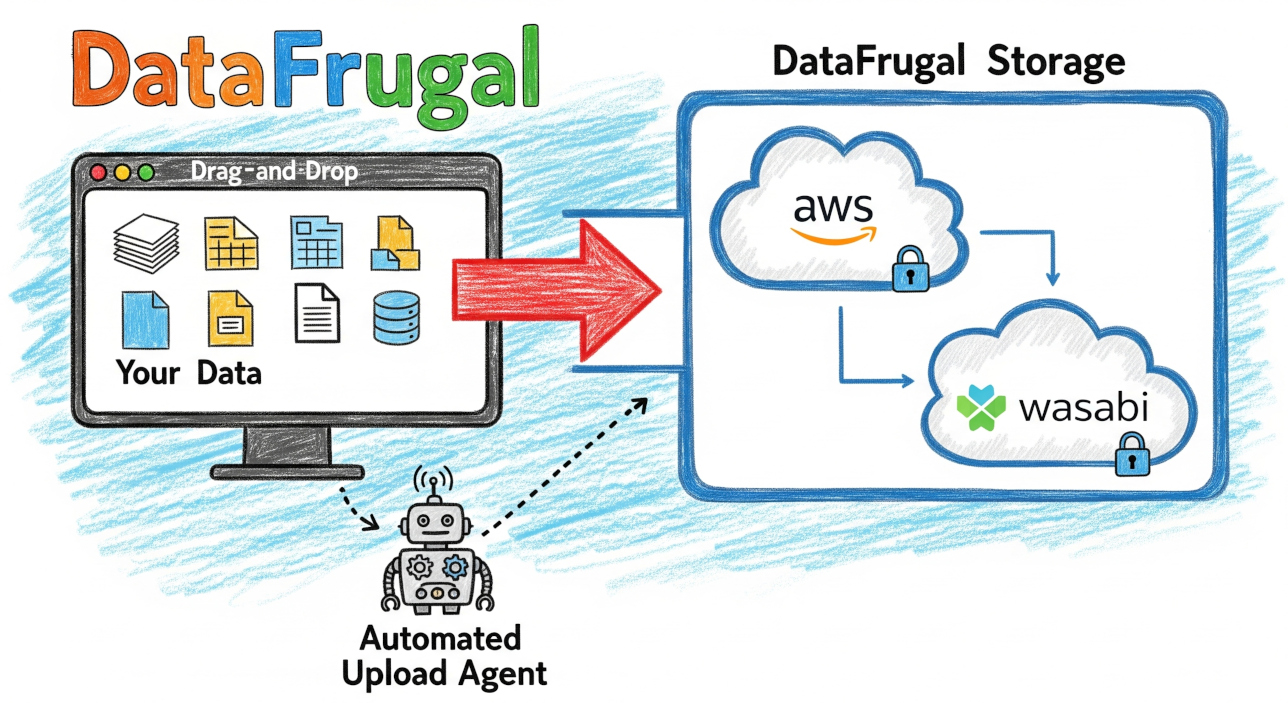
DataFrugal supports the protection and transfer of very large objects without requiring manual segmentation or protocol-level handling. Chunking, retries, and transfer orchestration are managed by the platform, allowing teams to work with large datasets through the UI, APIs, or df-agent without operational complexity.
Enterprise-Grade Handling for High-Volume Data
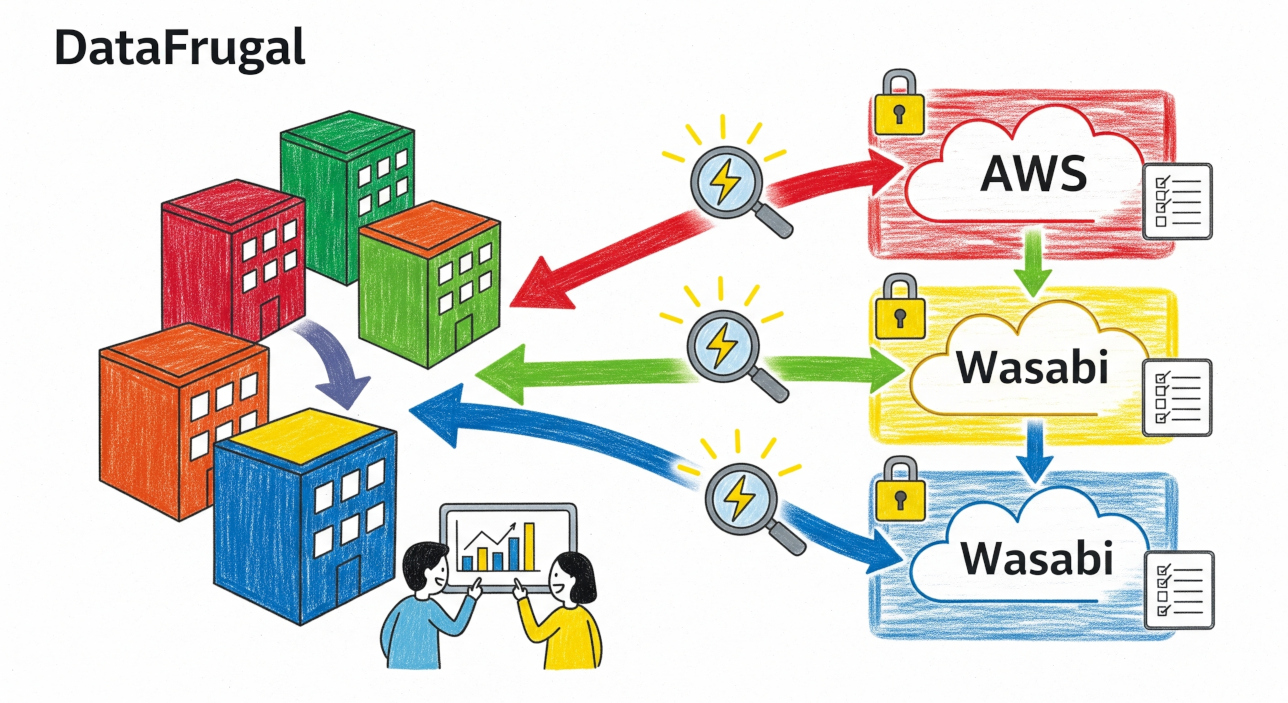
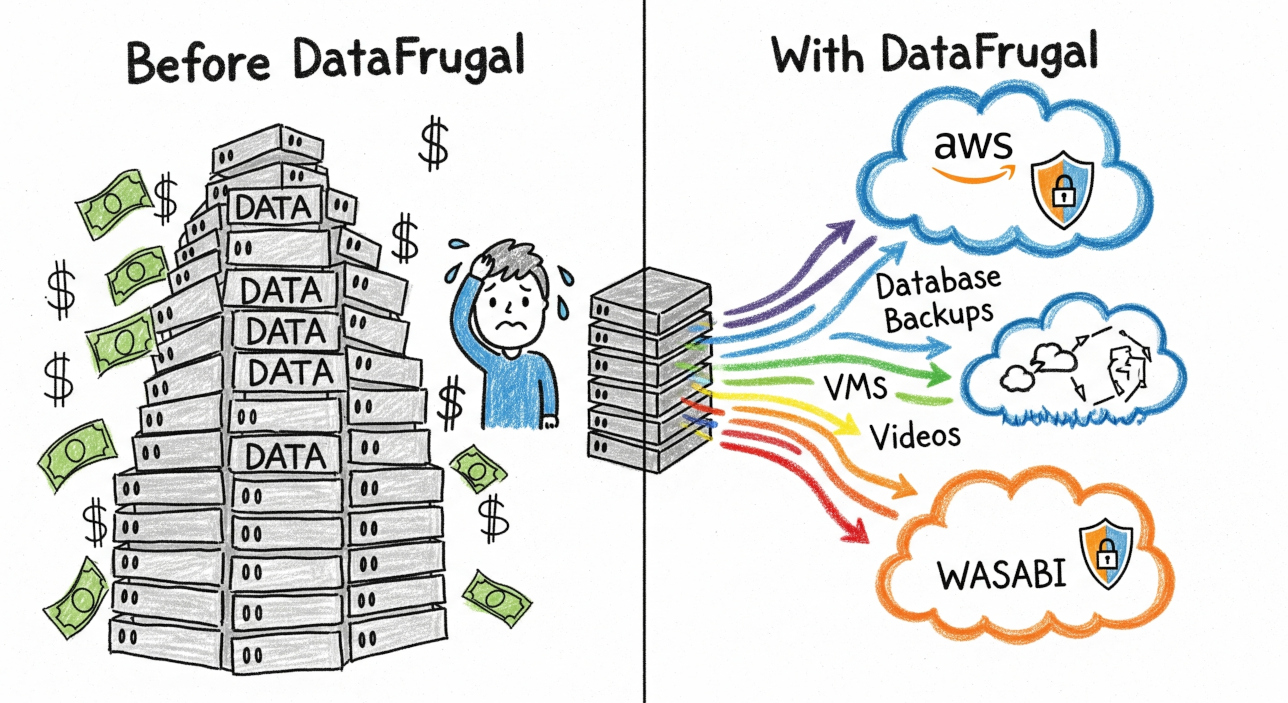
DataFrugal enables reliable handling of individual objects up to 5 TB in size across supported cloud backends. The platform abstracts multipart transfers, failure recovery, and performance optimization behind its own APIs and df-agent — without exposing underlying storage SDKs or credentials. Integrated security controls such as encryption, network restrictions, and key management policies ensure large data operations remain secure and governed, whether backed by AWS, Wasabi, or other compatible infrastructure.
Frequently Asked Questions
Learn more about large file cloud storage, enterprise data storage, scalable file storage, governance, and audit capabilities with DataFrugal.
What is large file cloud storage, and why do enterprises need
it?
Large file cloud storage is a solution designed to securely store, manage, and access high-volume files such as backups, logs, media assets, and datasets.
Enterprises need scalable storage that supports business growth while maintaining security, auditability, and operational visibility across cloud environments.
How can I upload large files to the cloud without affecting
performance?
The best way to upload large files to the cloud is by using a scalable cloud storage platform that supports high-capacity uploads, reliable data transfer, and centralized management.
Enterprise-grade solutions also provide audit trails, access controls, and governance features to help organizations manage data securely as storage volumes grow.
What makes a scalable file storage solution suitable for
growing businesses?
A scalable file storage solution allows organizations to expand storage capacity without disrupting operations.
It should support increasing workloads, multiple storage environments, secure access management, and centralized visibility into file activity. This helps businesses maintain performance while reducing operational complexity.
How is an enterprise data storage solution different from
basic cloud storage?
Basic cloud storage focuses on storing files, while an enterprise data storage solution adds governance, audit visibility, access controls, and operational traceability.
These capabilities help organizations demonstrate compliance, investigate incidents, protect critical business data, and meet customer or regulatory requirements more effectively.
Why should businesses choose a cloud storage platform with
governance and audit capabilities?
As businesses grow, managing data securely becomes as important as storing it. A cloud storage platform with governance and audit capabilities provides a recorded history of activity, centralized visibility into data operations, and controlled access to sensitive files.
These features help organizations prepare for compliance audits, reduce operational risks, and build customer trust by proving how business data is protected.